PAKHREEN JOURNAL
Thoughtful engineering, design, and digital systems.
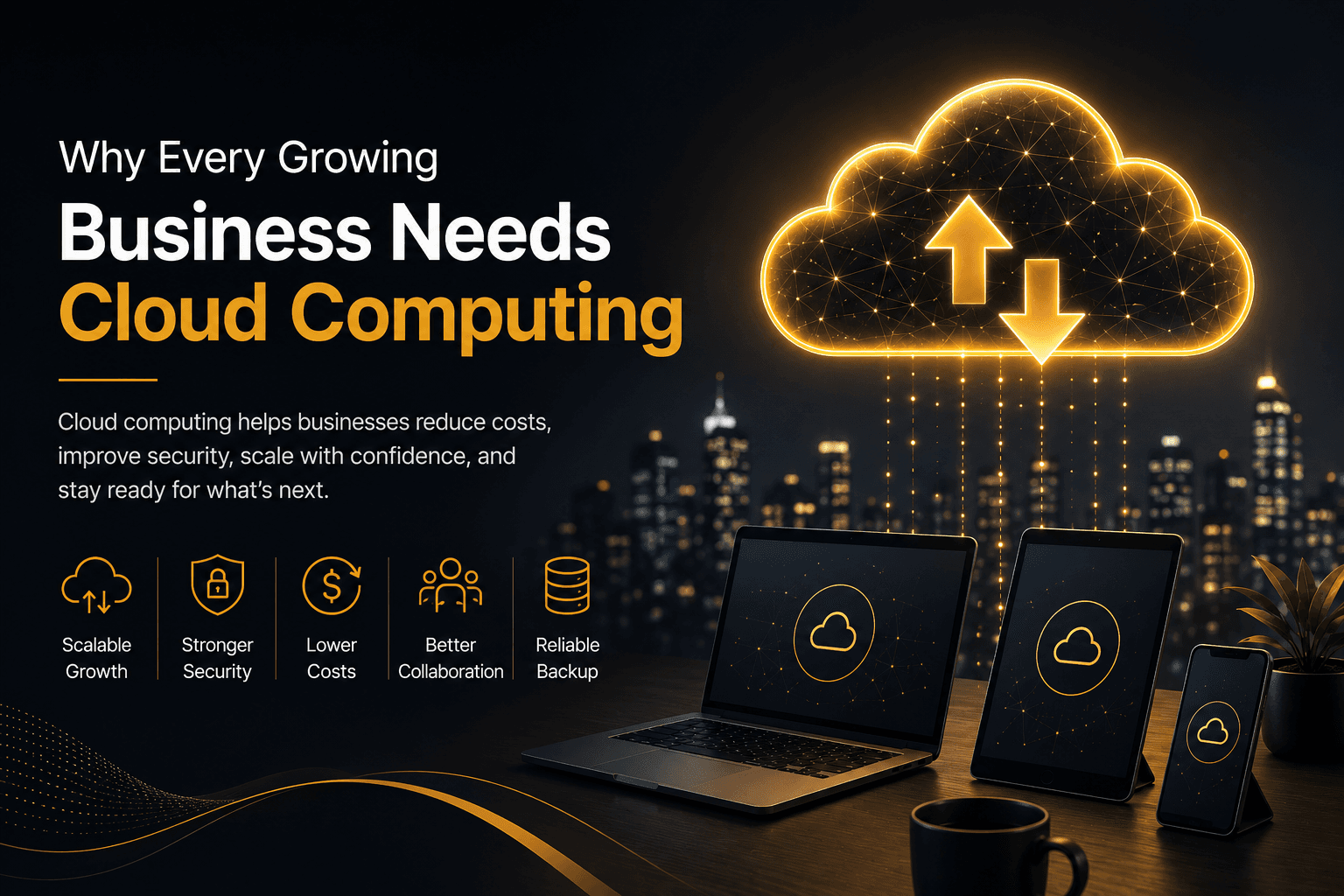
Why Every Growing Business Needs Cloud Computing
Running a successful business today requires more than hard work and great ideas. As organisations grow, they need technology that can support increasing workloads, enable collaboration, protect valuable data, and adapt to changing customer expectations.
Many businesses still rely on local servers, desktop software, external hard drives, or scattered file storage systems. While these solutions may have worked in the past, they often become difficult to manage as operations expand.
Cloud computing offers a smarter approach.
Instead of relying on physical hardware within your office, cloud computing provides secure access to applications, files, databases, and computing resources through the internet. It allows businesses to access powerful technology without the complexity and expense of maintaining their own infrastructure.
Today, cloud computing is no longer reserved for large enterprises. Businesses of every size are using cloud technologies to increase efficiency, reduce costs, improve security, and prepare for long-term growth.
What Is Cloud Computing?
Cloud computing is the delivery of computing services—including storage, servers, databases, networking, software, and analytics—over the internet instead of relying entirely on local hardware.
Rather than purchasing expensive servers and maintaining them in-house, businesses can access these services whenever they need them through trusted cloud providers.
Common examples include:
• Cloud file storage
• Online collaboration platforms
• Customer relationship management (CRM) systems
• Accounting software
• Website hosting
• Backup and disaster recovery solutions
• Business email platforms
• Virtual servers and databases
Although many people use cloud services every day without realising it, the true value lies in how these technologies help businesses become more flexible, efficient, and resilient.
Why Cloud Computing Matters More Than Ever
Business environments continue to evolve rapidly.
Remote work has become increasingly common, cybersecurity threats continue to grow, and customer expectations are higher than ever before. Businesses need systems that allow employees to work securely from anywhere while ensuring services remain reliable.
Cloud computing provides the foundation for this modern way of working.
Instead of being limited by office hardware or physical locations, employees can securely access important business information wherever they are, allowing organisations to remain productive regardless of location.
This flexibility has become a competitive advantage rather than simply a convenience.
1. Reduce IT Costs
One of the biggest advantages of cloud computing is its ability to reduce infrastructure costs.
Traditional IT environments often require significant investment in:
• Physical servers
• Networking equipment
• Maintenance
• Hardware upgrades
• Electricity
• Cooling systems
• Backup equipment
• IT support
Cloud services remove much of this burden.
Instead of making large upfront investments, businesses typically pay only for the resources they actually use. This predictable pricing helps organisations better manage budgets while avoiding expensive hardware refresh cycles.
For many growing businesses, this means investing more money into innovation and customer service rather than maintaining ageing infrastructure.
2. Scale as Your Business Grows
Growth often creates new technology challenges.
More employees require additional storage, applications, computing power, and collaboration tools.
With traditional infrastructure, businesses frequently need to purchase new hardware months before it becomes necessary, tying up valuable capital.
Cloud computing offers a far more flexible approach.
Resources can often be increased or reduced within minutes, allowing businesses to scale according to actual demand rather than estimated future requirements.
Whether you're onboarding ten new employees or launching a new digital product, cloud infrastructure grows alongside your business.
3. Enable Secure Remote Work
Modern businesses are no longer confined to a single office.
Employees work from home, travel between client locations, or collaborate across multiple regions.
Cloud-based systems allow authorised users to securely access business applications, documents, and communication tools from virtually anywhere with an internet connection.
This improves:
• Productivity
• Team collaboration
• Business continuity
• Employee flexibility
Instead of emailing files between colleagues or relying on outdated USB drives, everyone works from the same up-to-date information.
4. Improve Collaboration Across Teams
Communication delays often occur when employees use different versions of documents or struggle to locate important information.
Cloud platforms solve this problem by allowing teams to collaborate in real time.
Employees can:
• Edit documents simultaneously
• Share files instantly
• Track changes
• Manage projects together
• Communicate through integrated platforms
Improved collaboration reduces duplication, speeds up decision-making, and helps projects move forward more efficiently.
5. Strengthen Data Security
One common misconception is that keeping data on office computers is automatically safer.
In reality, local systems are vulnerable to hardware failure, theft, ransomware, accidental deletion, and natural disasters.
Leading cloud providers invest heavily in security technologies that many businesses would struggle to implement independently.
These protections often include:
• Data encryption
• Multi-factor authentication
• Continuous monitoring
• Automatic security updates
• Access controls
• Redundant infrastructure
• Regular backups
Security remains a shared responsibility, but cloud platforms provide a strong foundation for protecting valuable business information.
6. Protect Your Business from Unexpected Disruptions
Every business should prepare for unexpected events.
Power failures, hardware failures, floods, cyberattacks, and human error can all disrupt operations.
Without reliable backups, businesses may lose critical customer information, financial records, or operational data.
Cloud-based disaster recovery solutions ensure important information remains available even if physical equipment is damaged or inaccessible.
This significantly reduces downtime and helps businesses recover faster.
7. Support Innovation
Cloud computing allows businesses to experiment and innovate without purchasing expensive infrastructure.
New applications, websites, analytics platforms, AI tools, and customer portals can often be deployed quickly using cloud resources.
Instead of waiting weeks or months for new hardware, businesses can launch projects rapidly and adapt as requirements evolve.
This agility helps organisations remain competitive in fast-changing markets.
Common Myths About Cloud Computing
"Cloud computing is only for large companies."
Modern cloud platforms are designed for organisations of every size, from sole traders to global enterprises.
"It's too expensive."
For many businesses, cloud computing actually reduces overall technology costs by eliminating major hardware investments and simplifying maintenance.
"Cloud storage isn't secure."
Leading cloud providers invest billions of dollars into cybersecurity, infrastructure protection, and compliance. While no system is completely risk-free, cloud platforms often provide stronger security than traditional on-premises environments.
"Migration is too difficult."
Every migration is different, but with proper planning and the right technology partner, businesses can move systems gradually while minimising disruption.
How to Start Your Cloud Journey
Moving to the cloud doesn't have to happen all at once.
Many successful organisations begin by migrating one system at a time.
A typical approach includes:
• Assessing existing infrastructure
• Identifying business goals
• Prioritising workloads
• Planning migration carefully
• Strengthening security
• Training employees
• Monitoring performance
This phased approach reduces risk while allowing businesses to realise benefits early.
The Future of Business Is Built in the Cloud
Cloud computing continues to power emerging technologies including artificial intelligence, machine learning, automation, advanced analytics, and Internet of Things (IoT) solutions.
As customer expectations evolve and businesses become increasingly digital, cloud infrastructure provides the flexibility required to adopt new technologies without rebuilding entire systems.
Rather than simply supporting business operations, the cloud has become the foundation upon which modern organisations innovate, compete, and grow.
Businesses that embrace cloud computing today position themselves to adapt more quickly to tomorrow's opportunities.
Frequently Asked Questions
Is cloud computing suitable for small businesses?
Yes. Cloud services are available for businesses of all sizes and often provide enterprise-level capabilities without requiring significant upfront investment.
Is cloud computing secure?
Leading cloud providers implement advanced security measures including encryption, identity management, continuous monitoring, and regular security updates. Businesses should also follow best practices such as strong passwords and multi-factor authentication.
Will moving to the cloud interrupt my business?
Not necessarily. Many organisations migrate gradually, allowing critical systems to remain operational throughout the transition.
Can cloud computing reduce business costs?
In many cases, yes. Businesses often reduce hardware purchases, maintenance expenses, and operational overhead while benefiting from flexible, usage-based pricing.
What's the difference between cloud storage and cloud computing?
Cloud storage focuses on storing and accessing files online. Cloud computing includes a much broader range of services such as servers, databases, software, networking, analytics, and application hosting.
Final Thoughts
Cloud computing is more than a technology trend—it's a strategic investment in the future of your business. By improving collaboration, strengthening security, reducing operational costs, and enabling scalable growth, cloud solutions help organisations become more agile and resilient in an increasingly digital world.
Whether you're modernising existing systems or planning for future expansion, adopting cloud technologies can provide the flexibility and confidence needed to support long-term success.